The Wood Wide Web: the invisible network that connects the Amazon rainforest
Did you know that trees communicate with each other? For many years, it was believed that trees competed for light, water, and nutrients. Today, science has revealed something surprising: forests function as interconnected communities thanks to an underground network known as the Wood Wide Web.
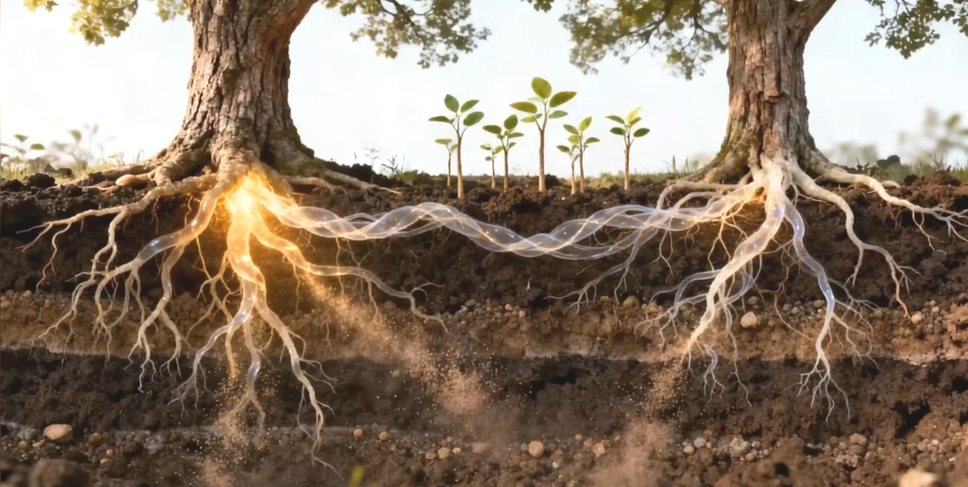
This invisible network plays a key role in ecosystem health and is especially important in the Amazon, one of the most complex living systems on the planet.
What is the Wood Wide Web?
The Wood Wide Web is an underground network made up of:
- tree roots
- mycelium (fungal filaments)
- soil microorganisms
Through this network, trees can exchange nutrients, water, and even warning signals. This is not a metaphor—it is a biological process confirmed by multiple scientific studies.
Mycelium: the internet of the forest
Mycelium is the main structure of this network. It is made up of millions of hyphae that spread through the soil and connect to the roots of plants and trees.
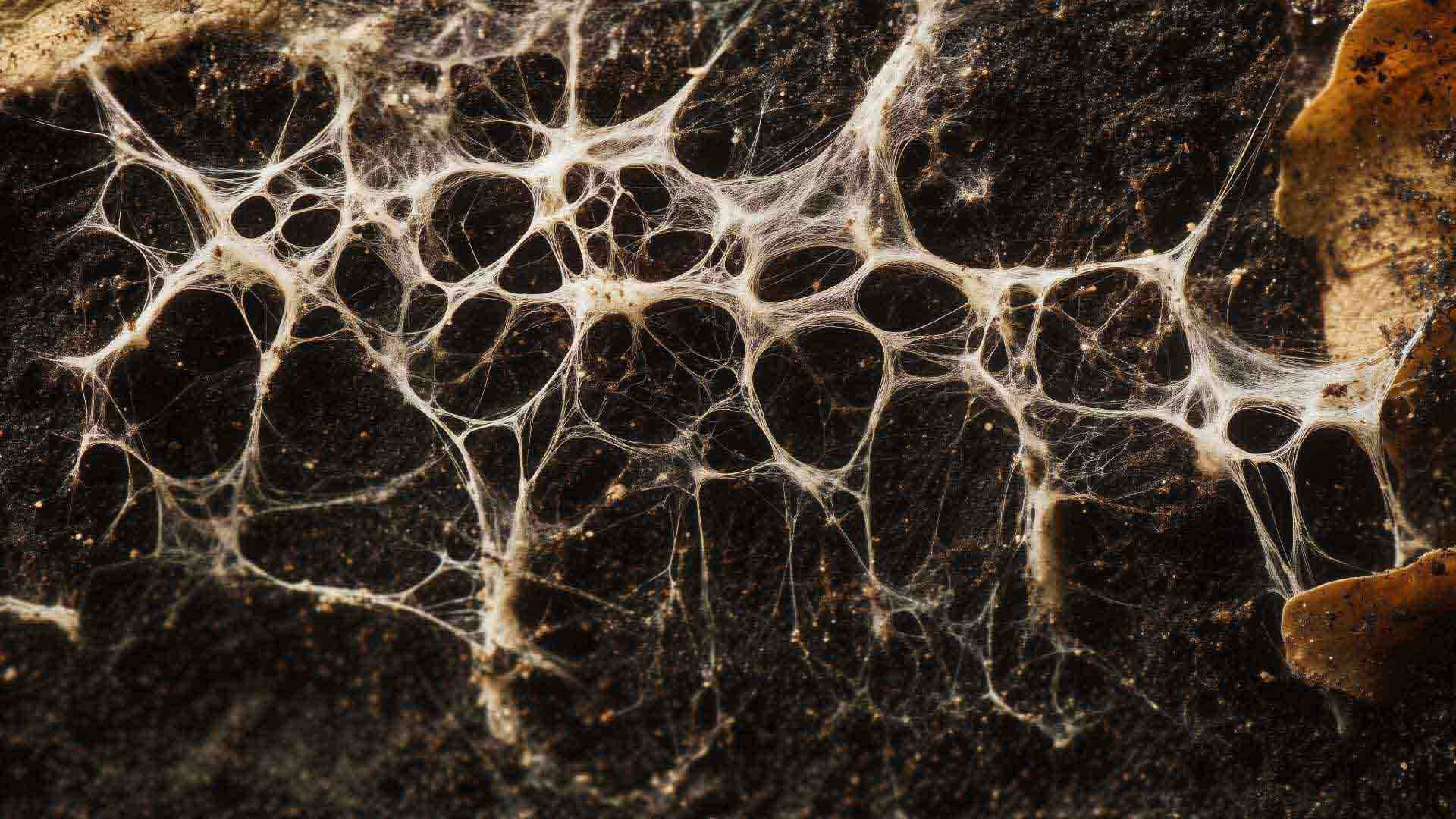
Tomada de: https://www.plataformatierra.es/innovacion/el-micelio-la-red-subterranea-que-sostiene-el-planeta
Thanks to mycelium:
- trees receive nutrients such as phosphorus and nitrogen
- the soil maintains its fertility
- young plants can survive in complex environments
In return, trees provide fungi with sugars produced through photosynthesis. It is a relationship based on cooperation, not competition.
Trees helping one another
One of the most fascinating discoveries about the Wood Wide Web is that trees:
- can transfer carbon and water to other trees
- support young or weakened individuals
- warn each other about pest attacks or environmental stress
The largest and oldest trees (such as Shihuahuaco or Cumaru) play a key role as central nodes in the network, supporting many other species around them.
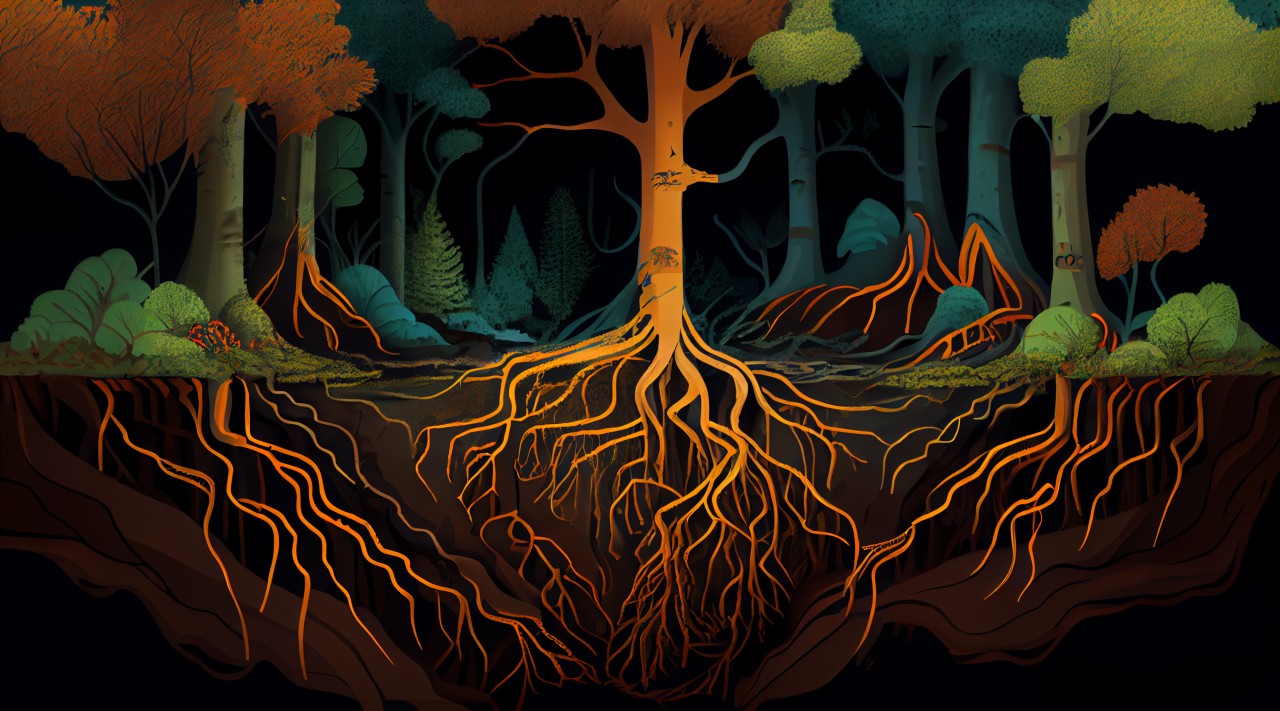
lustración de la Wood Wide Web (Antonio Di Bacco)
The Wood Wide Web in the Amazon
In the Amazon, this network is essential because:
- soils are naturally poor in nutrients
- biodiversity depends on the constant recycling of organic matter
- forest regeneration occurs thanks to these invisible connections
Without this underground network, the Amazon rainforest could not sustain its extraordinary biodiversity.
What happens when a forest is deforested?
When a forest is deforested or fragmented:
- the Wood Wide Web is disrupted
- the soil loses fertility
- natural regeneration becomes slower and more fragile
- resilience to climate change is reduced
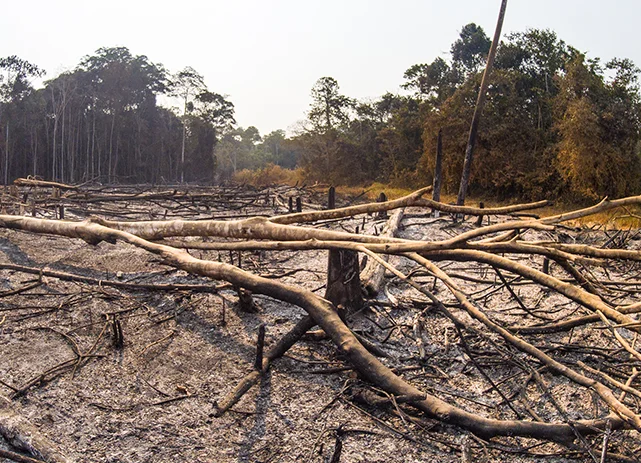
Reforesting without protecting the soil and mycelium is not enough to restore a complex ecosystem.
Protecting great trees means protecting living networks
When we care for the forest, we care for the network that sustains life.
Protecting the Amazon means protecting its invisible connections.
Discover how you can support the conservation of the Amazon rainforest with ARBIO Perú. Adopt a great centennial tree.
Each tree is not an isolated element. It is part of a network that sustains:
- climate
- water
- biodiversity
- human life
That is why conserving primary natural forests is one of the most effective strategies in the face of the climate crisis.
The approach of ARBIO Perú
At ARBIO Perú, we protect the health of the standing Amazon rainforest by caring not only for the visible trees, but also for:
- the soil
- the mycelium
- the connections that allow the forest to function as a living system
True conservation also happens underground.
Why does this knowledge matter today?
Understanding the Wood Wide Web reminds us that:
- nature works as a network
- small actions can have big impacts
- protecting a great Amazonian tree means protecting much more than what we can see
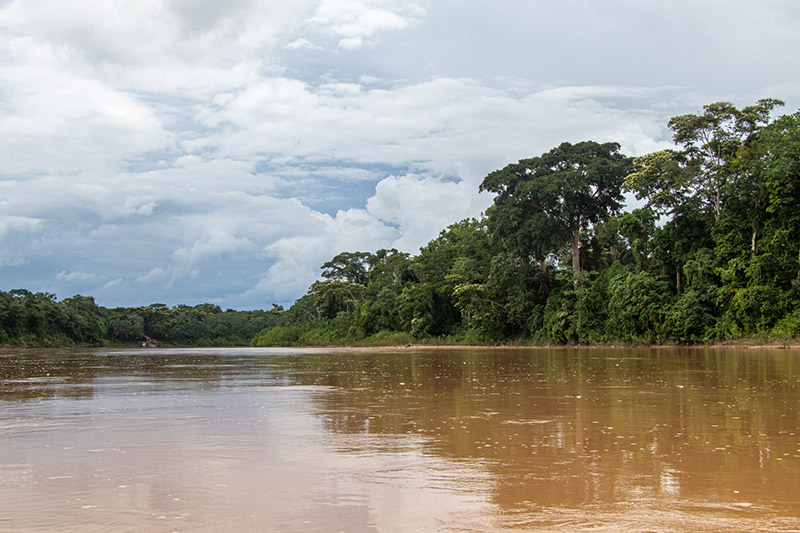
When we care for the forest, we care for the network that sustains life.
Protecting the Amazon means protecting its invisible connections.
Discover how you can support the conservation of the Amazon rainforest with ARBIO Perú. Adopt a great tree.